
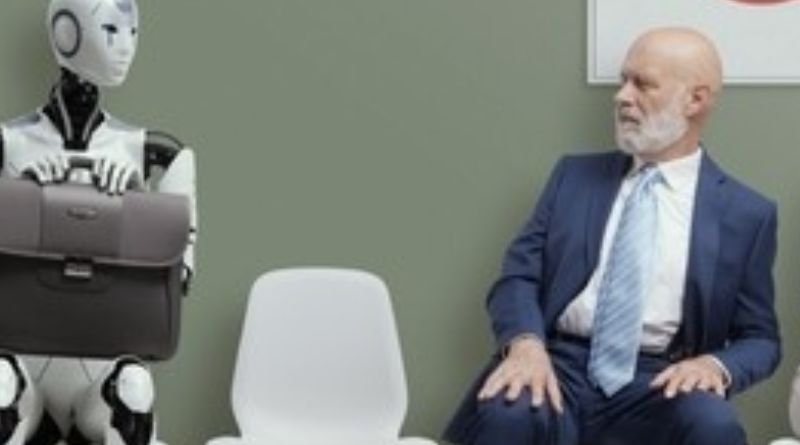
Every few months there’s a new headline claiming AI is about to replace teachers, therapists, doctors, or your job entirely. It’s a genuinely unsettling question to sit with, especially if you’ve watched a chatbot write a decent essay or an app track your mood better than you expected. So it’s worth asking honestly: is this fear proportional to what’s actually happening, or is something more specific and more limited going on?
The honest answer is that technology is extraordinarily good at some things and structurally incapable of others — not “not yet capable,” but incapable in a way that isn’t just a matter of better engineering down the road. This article breaks down exactly where that line sits: what AI and automation genuinely do well, and the specific, well-documented reasons certain human roles and relationships can’t be replicated by a screen, no matter how advanced the underlying model gets.
What Technology Is Actually Good At
It’s worth being fair to the technology before explaining its limits, because pretending AI and automation are useless would be its own kind of dishonesty. Software genuinely excels at processing huge amounts of information, detecting patterns across data sets far larger than any person could hold in their head, performing repetitive tasks without fatigue or error creep, and completing narrow, well-defined jobs faster and more consistently than a human ever could.
This is real, valuable capability. Automated systems handle scheduling, inventory management, basic customer service routing, data entry, and pattern detection in ways that free up human time for work that actually requires a person. The mistake isn’t using these tools — it’s assuming that because a tool is good at processing information, it’s also capable of everything that surrounds a genuinely human interaction or decision.
Where the Line Actually Sits
Emotional Presence Isn’t the Same as Emotional Processing
An AI system can process the words “I’m fine” and return an appropriate-sounding response. What it can’t do is notice the pause before you said it, the shift in your voice, or the fact that your face said something different than your words. A trained human — a therapist, a close friend, a good manager — can sense that gap between what someone says and what they mean, because reading a person isn’t really about parsing sentences. It’s about picking up on dozens of small, simultaneous signals that most people can’t even fully articulate, let alone train a model to detect reliably across every person’s unique way of expressing distress.
This matters most in fields built entirely around this kind of attentiveness — therapy, healthcare, teaching, caregiving — where the “data” being processed isn’t really data at all. It’s a person, communicating in a way that shifts moment to moment based on trust, safety, and history with the specific human in front of them.
The Relationship Itself Is Part of the Outcome
In therapy specifically, researchers have found that the relationship between therapist and client — what’s called the therapeutic alliance — accounts for a meaningful share of positive treatment outcomes, independent of which specific technique or approach is used. That’s a genuinely important finding, because it means the bond itself isn’t incidental to the help being provided. It is the help, or at least a load-bearing part of it.
This pattern shows up well beyond therapy. A doctor who remembers your history and has earned your trust gets more honest answers from you than a new provider would. A teacher who knows a specific student’s patterns can push at exactly the right moment in a way a generic curriculum can’t. None of this is really about information — it’s about a relationship built over time between two specific people, and that kind of continuity and trust doesn’t transfer to a tool, no matter how personalized its outputs become.
(Internal link opportunity: a guide on “how to build trust with a new therapist or provider” could link from this section.)
Judgment Requires Weighing Values, Not Just Data
AI systems are built to optimize against defined objectives and follow patterns learned from training data. What they consistently struggle with is genuine ethical judgment — weighing competing values against each other in a specific, messy, real-world situation where there isn’t a clean “correct” answer available in the training data.
A hiring manager deciding between two flawed candidates, a doctor weighing a patient’s quality-of-life preferences against a purely clinical recommendation, a judge considering context beyond sentencing guidelines — these decisions require understanding human values, social context, and the specific stakes of a specific person’s life. Software can surface relevant information to support that decision. It can’t make the value judgment itself in any way that carries moral accountability, because accountability requires a person who can be responsible for the outcome.
Creativity Rooted in Lived Experience
AI-generated content is genuinely impressive at recombining and remixing patterns it’s learned from existing material. What it doesn’t do is originate meaning from lived experience — grief that reshapes how someone sees the world, a specific memory that becomes an image in a poem, the particular ache of a place that shaped who you are. Human creativity draws on things that were actually lived through, not just patterns that were observed.
This doesn’t mean AI-assisted creative work is worthless — plenty of useful, even beautiful things get made with these tools as part of the process. But the originating spark, the thing being expressed, still has to come from someone who actually experienced something worth expressing.
Physical Dexterity and Adaptability
Outside of narrow, tightly controlled tasks, robots and automated systems remain far behind human dexterity, especially in unpredictable physical environments. Tasks requiring fine hand-eye coordination, rapid adaptation to unexpected changes, or working safely and effectively around other people in a shared physical space are still solidly in human territory, and have been for longer than most people realize given how much attention software gets in this conversation.
(Internal link opportunity: a guide on “which jobs are actually at risk from automation” would fit naturally here.)
The Real Risk Isn’t Replacement — It’s Substitution Fatigue
A more useful way to frame this whole question: technology built to make human services more accessible can quietly end up training people away from real human connection if it’s leaned on as a full substitute rather than a supplement. A mental health app can help someone track moods, build a coping routine, or bridge a gap before they can see a professional. That’s genuinely valuable. But it becomes a problem when access to a tool gets mistaken for access to actual care, and someone who needs a human relationship settles for a simulation of one because it’s easier or cheaper to reach.
This distinction — support tool versus replacement — is the one worth holding onto as more of daily life gets mediated by software. The question isn’t whether the technology is good or bad. It’s whether it’s being used to expand what humans can offer each other, or quietly used instead of it.
Frequently Asked Questions
Can AI ever fully replace human therapists? Unlikely in any complete sense, based on current evidence. Research consistently shows the human relationship itself — the therapeutic alliance — accounts for a meaningful share of positive outcomes, independent of technique. AI tools can support mental wellness between sessions, but they can’t replicate the trust, presence, and years-long relationship that make therapy work.
What jobs are safest from being replaced by technology? Roles built around genuine relationship, judgment under ambiguity, and physical adaptability tend to be the most resistant — therapy, teaching, skilled trades, caregiving, leadership, and any work where trust built over time is part of what’s actually being delivered, not just the information exchanged.
Is it bad to use AI tools for things like mental health support? Not inherently. Used as a supplement — tracking patterns, building routines, offering support between professional sessions — these tools have real value. The risk comes when a tool is treated as a full substitute for human connection or professional care rather than a bridge toward it.
Why can’t AI replicate human creativity? AI-generated content recombines patterns learned from existing material, which can be genuinely impressive, but it doesn’t originate from lived experience the way human creativity does. The meaning behind a piece of human-made art typically traces back to something the creator actually lived through, not just patterns they observed.
Final Thoughts
Technology keeps getting better at processing information, and that’s a real, valuable trend worth embracing where it genuinely helps. But processing information was never the whole job in the roles people worry about losing to automation — therapy, teaching, caregiving, creative work, leadership. Those roles are built on presence, judgment, relationship, and lived experience, and those things don’t get replaced by better software. They get protected by remembering the difference between a tool that helps and a person who understands.